Lithium battery fires: why they happen, the warning signs and what to do
In 2025, the UK’s Office for Product Safety and Standards received reports of 267 fires involving e-bikes or e-scooters. A lithium-ion battery can catch fire if it’s damaged, overcharged, charged with the wrong equipment, exposed to extreme heat or cold, or has a manufacturing defect.
LiFePO4 is more stable than nickel-rich chemistries but can still burn. Stop using a battery that gives off an odor, swells, leaks, gets hot or makes odd noises, and if it smokes, call 911 in the US; in Great Britain, official guidance says to get out and call 999.
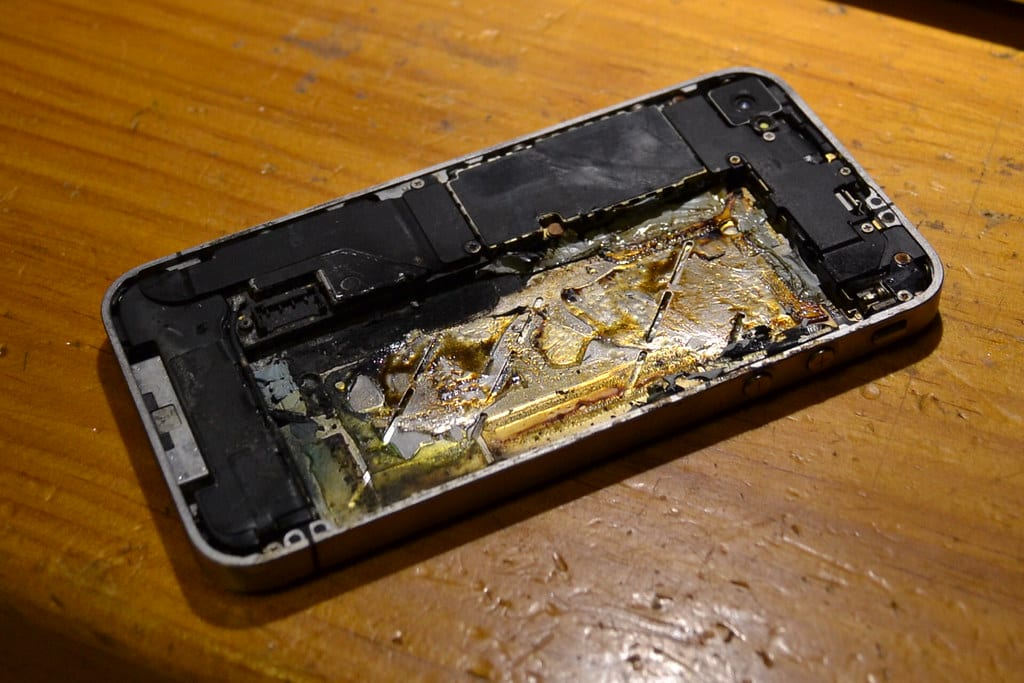
Causes of lithium battery fires include physical damage, overcharging, the wrong charger, extreme temperatures and product defects 1. In 2025, the UK’s Office for Product Safety and Standards received reports of 267 fires involving e-bikes or e-scooters 2. If an e-bike battery smokes, a fire has already started: guidance for England, Scotland and Wales says to get out and call 999 3; in the US, call 911 4.
Why do lithium batteries catch fire?
The National Fire Protection Association (NFPA), a private nonprofit that writes US fire codes and standards, lists these causes 1:
- physical damage: a punctured or crushed battery, or one exposed to water
- electrical damage: overcharging, or charging equipment not designed for the battery
- exposure to extreme temperatures
- product defects
The dangers are heat, smoke, toxic gases and possible explosions 1. Thermal runaway (a cell overheating from its own heat-releasing reactions) can also happen without warning, and can start on its own because of a manufacturing defect 5.
LiFePO4 vs NMC fire risk
Lithium iron phosphate (LFP, or LiFePO4) is more stable and less flammable than nickel-rich chemistries such as high-nickel NMC 6. Researchers at the US National Institute for Occupational Safety and Health (NIOSH) heated single cells inside sealed canisters until they went into thermal runaway 7. Their LFP cell took significantly longer than an NMC 811 cell to reach thermal runaway, because its heat-releasing reactions started at a higher temperature 7.
Even so, France’s industrial-risk institute, INERIS, concludes that LFP batteries are not intrinsically safe. Like every current lithium-ion chemistry, they can go into thermal runaway.
Once runaway starts, LFP tends to give off smoke with no visible flame, and this stage can last a long time. The flammable gases in that smoke can collect into an explosive atmosphere in a confined space 8.
The gases differ, too: a review of published tests found that, on average, NMC cells give off a larger specific volume of gas, but the gas from LFP cells was more toxic and more flammable 9.
Our reading: a LiFePO4 battery is harder to push into thermal runaway, but its risk is not zero, and its gases can be more hazardous. The precautions below apply to every chemistry. The lab results are covered in more depth in our lithium-ion guide’s section on thermal runaway.
Lithium battery fire statistics in the US and UK
The official counts cover e-bikes, e-scooters and similar devices, not home or RV batteries, but they give an idea of the problem.
- UK. The Office for Product Safety and Standards (OPSS) received reports of 267 fires involving e-bikes or e-scooters in 2025, 214 of them from the London Fire Brigade. Of these, 217 were e-bike fires, 38% (82) of them involving conversion kits 2.
- US. From January 1, 2021, to November 28, 2022, the Consumer Product Safety Commission (CPSC) received reports of at least 208 micromobility fire or overheating incidents in 39 states. At least 19 people died: five in incidents involving e-scooters, 11 involving hoverboards and three involving e-bikes 10.
As we read it, both sources give reported incidents, not complete counts.
Warning signs of a failing battery
Stop using a lithium-ion battery if you notice any of these signs 4 11.
- an odor
- a change in color or shape
- too much heat
- leaking
- odd noises
For e-bike batteries, the UK Department for Transport adds bulging or swelling, lumps, hissing or cracking sounds, and a battery that won’t charge fully or takes longer than usual to charge 3.
Safe charging and storage habits
US and UK fire-safety advice largely agrees.
- Buy listed or certified products. In the US, NFPA advises choosing batteries listed by a nationally recognized testing laboratory 1. Cheap chargers and batteries may not meet UK safety standards 12.
- Use the right charger. Use only compatible charging equipment and, to be on the safe side, the charger that came with the device 1. The London Fire Brigade also accepts a genuine brand-name replacement from a supplier you trust 13.
- Don’t charge on beds or couches. Don’t charge a device under a pillow, on a bed or on a couch, and stop charging it once it’s full 4.
- Watch the temperature. Keep batteries at room temperature when possible, and don’t charge them below 32 °F (0 °C) or above 105 °F (40 °C) 4. LiFePO4 makers set their own limits, covered in charging LiFePO4 in the cold.
- Charge where a fire can’t trap you. In England, Scotland and Wales, the Department for Transport’s e-bike guidance says not to charge where a fire could block your way out of your home, and to charge only while you’re awake 3. NFPA says the safest place to charge an e-bike, an e-scooter or an electric vehicle is outdoors, away from any structure and out of direct sunlight 1.
- Store spares safely. Keep spare batteries away from anything that can burn 4, and keep them out of direct sunlight and hot cars 11.
In our view, these tips are written for devices and e-bikes. For a home battery, follow the manufacturer’s manual and ask the installer where it can be installed and how it must be protected.
What to do if a lithium battery catches fire
For a smoking e-bike battery, the Department for Transport’s guidance for England, Scotland and Wales is to get out, stay out and call 999, since the fire has already started 3. If there are warning signs but no smoke, turn off and unplug the charger. If possible, carefully move the battery outside, away from people and anything that can burn 3.
In the US, NFPA’s advice is to move the device away from anything that can catch fire, if it’s safe to do so, and to call 911 4. NFPA’s advice to use water on these fires is aimed at firefighters 1.
As we read it, that means you shouldn’t try to fight a battery fire yourself.
Swollen lithium batteries and how to handle them
Swelling is one of the warning signs. If a battery starts to swell, follow the London Fire Brigade’s steps 13.
- Stop charging.
- Turn off the device.
- Leave the casing alone. Don’t remove it or tamper with it.
- Get help. Contact the manufacturer or a certified technician.
The Mid and West Wales Fire and Rescue Service puts it more simply: stop using batteries that are swollen, damaged or overheating 12.
Recent recalls of power stations and power banks
These recalls and warnings show how such failures turn up in real products.
- US, HALO 1000 power stations (August 2024): about 5,740 units recalled because the lithium-ion batteries can overheat. A 79-year-old man died of smoke inhalation in June 2022, and there were four other fire reports 14.
- US, Aeiusny 400W and 500W power stations (September 2025): the CPSC warned consumers to stop using these units, which were sold on Amazon. There had been 24 reports of fires and explosions, three injuries and 10 property-damage reports totaling about $450,000. It was a warning rather than a recall, because the Chinese manufacturer didn’t respond to the CPSC’s requests for a recall 15.
- US, Goal Zero YETI 3000X power stations (August 20, 2026): about 46,200 units recalled because the circuit board can overheat. There were four reports of units catching fire, overheating or smoking, and no injuries. The fix is a free firmware update 16.
- UK, Xiaomi 33W Power Bank 20000mAh with Integrated Cable, model PB2030MI (December 23, 2025): the units listed in the notice were recalled because their lithium-ion batteries can overheat in use, with a risk of smoking, melting or fire 17.
In our view, it’s worth checking whether a battery product you use has been recalled. In the US, the CPSC’s site lists them; in the UK, GOV.UK has a product safety alerts, reports and recalls page.
How to dispose of lithium batteries
In the US, the Environmental Protection Agency (EPA) advises that lithium-ion batteries and the devices that contain them should not go in household garbage or recycling bins. Take them to dedicated battery recycling or household hazardous waste drop-off sites.
Before you do, tape the terminals or put each battery in its own plastic bag (or both) 18. NFPA’s tip sheet also says not to put them in the trash or regular recycling bins, because they could start a fire 4.
Our reading of the EPA’s page: disposal rules for households are set by states and localities.
In the UK, shops and online sellers that supply 32 kg or more of portable batteries a year must take back used portable batteries of any type for free, not just the types they sell. They need a collection point where they supply batteries 19.
Car batteries and batteries from industrial equipment aren’t included 19. The Mid and West Wales service adds two pieces of advice: never throw lithium batteries in household rubbish, and tape over the terminals 12.
Our reading: a home storage battery isn’t a portable battery, so ask the installer or the manufacturer how to return or dispose of it.
For choosing, sizing and charging a battery, see the rest of our batteries section.
Sources
- Lithium-Ion Battery Safety (NFPA consumer page, Energy Transition section)
- Fires in e-bikes and e-scooters: 2025
- Battery safety for e-cycle users (Guidance)
- Lithium-Ion Battery Safety (safety tip sheet, LithiumIonBatterySafetyTips.pdf)
- PackSafe - Lithium Batteries
- Batteries and Secure Energy Transitions (World Energy Outlook Special Report), sections 1.2 and 2.3.2
- Comparison of thermal runaway pressures within sealed enclosures for nickel manganese cobalt and iron phosphate cathode lithium-ion cells
- Profil de risque des batteries Li-ion LFP (Ineris-213996-2761939-v1.0)
- Review of gas emissions from lithium-ion battery thermal runaway failure - Considering toxic and flammable compounds
- CPSC Calls on Manufacturers to Comply with Safety Standards for Battery-Powered Products to Reduce the Risk of Injury and Death
- Battery Fire Safety
- Lithium Battery Fire Safety (Your safety, In your home)
- Batteries and chargers - Fire safety at home
- HALO 1000 Portable Power Stations Recalled Due to Serious Fire and Burn Hazards; One Death Reported
- CPSC Warns Consumers to Immediately Stop Using Aeiusny Power Stations Due to Risk of Serious Injury or Death from Fire; Sold on Amazon
- Goal Zero Recalls YETI 3000X Power Stations Due to Serious Risk of Injury from Fire and Burn Hazards (recall of August 20, 2026)
- Product Recall: Xiaomi 33W Power Bank 20000mAh with Integrated Cable (2510-0232)
- Used Lithium-Ion Batteries (Reduce, Reuse, Recycle)
- Battery waste: retailer and distributor responsibilities