Lithium-ion batteries explained: NMC, LFP and the other types
Lithium-ion is a family of rechargeable batteries, not one chemistry. The main types differ mostly in their positive electrode: nickel-based NMC and NCA pack in the most energy, while lithium iron phosphate (LFP, or LiFePO4) lasts more cycles, is more thermally stable and costs less per kWh. Any lithium-ion battery can overheat and catch fire if it’s damaged or misused.
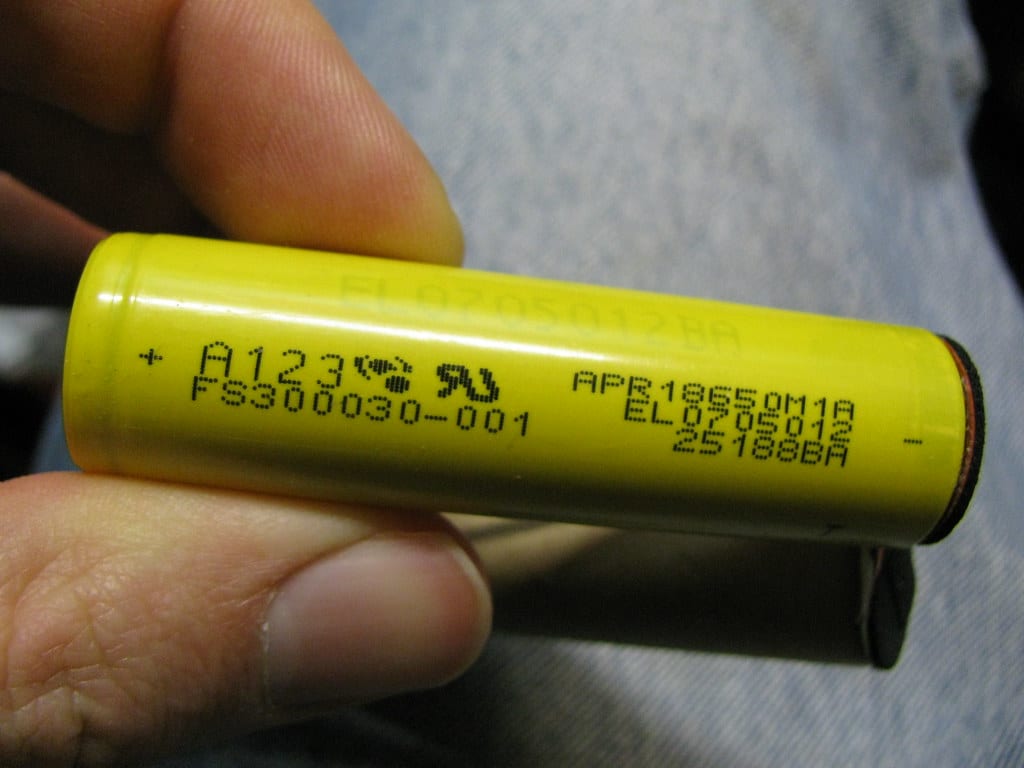
“Lithium” shows up all over our batteries section, but the word covers several chemistries that behave differently. This guide explains what lithium-ion, LiFePO4, NMC, NCA and LiPo mean, how they differ in energy, lifespan and safety, and which one suits which use.
What "lithium-ion" covers
A lithium-ion cell has a negative electrode (usually graphite), a positive electrode (typically a lithium metal oxide), an electrolyte and a separator, a porous barrier that keeps the two electrodes from touching. When the cell discharges, lithium ions leave the negative electrode and move into the positive one, while electrons flow through the outside circuit and power your device.
Charging pushes them back the other way. That’s how the Department of Energy’s storage handbook describes it, in a chapter by Sandia National Laboratories and Saft authors 1.
The chemistries differ mostly in the positive electrode. The same handbook sorts them into three structures 2 3: olivine (lithium iron phosphate, LFP, also written LiFePO4), spinel (lithium manganese oxide, LMO) and layered oxides (LCO, NMC and NCA). NMC (nickel manganese cobalt) and NCA (nickel cobalt aluminum) both grew out of LCO (lithium cobalt oxide).
NMC comes in versions such as NMC 111, 532, 622 and 811 2 4. At the negative electrode, lithium titanate (LTO) sometimes replaces graphite. Sandia says it can sustain tens of thousands of cycles, but doesn’t say under what conditions or to what remaining capacity 2.
So LiFePO4 isn’t an alternative to lithium-ion: it is a lithium-ion battery. When a listing contrasts “lithium” with “LiFePO4,” the first word may mean a nickel-cobalt chemistry such as NMC. Check the datasheet to see which (our reading).
US rules don’t treat LiPo (lithium polymer) as a separate chemistry either. US hazardous materials rules define a lithium-ion cell as a rechargeable cell whose positive and negative electrodes are both lithium compounds, with no metallic lithium in either.
A lithium-ion polymer cell that uses lithium-ion chemistries is regulated as a lithium-ion cell 5. According to Sandia, “pouch” cells are prismatic cells wrapped in a polymer film 2.
Don’t confuse lithium-ion with lithium metal batteries. Under US hazardous materials rules, a lithium metal battery uses lithium metal or a lithium alloy as its anode 6. The Federal Aviation Administration (FAA) describes lithium metal batteries as non-rechargeable and lithium-ion batteries as rechargeable 7.
Cell voltage
A cell’s voltage depends on its chemistry. Victron gives 3.2 V nominal for one LFP cell: its 12.8 V batteries put four in series, its 25.6 V batteries eight 8.
In Sandia’s study of three commercial 18650 cells, one per chemistry, the makers’ specifications gave 3.6 V for the Panasonic NCA cell and the LG Chem NMC cell, and 3.3 V for the A123 LFP cell 9. A 12-volt lead-acid battery has six cells of about 2 V each (our calculation).
LFP cells have a flat discharge curve. According to Sandia, that suits constant-power loads. But it makes the cells harder to balance when the battery runs at partial charge for long periods.
Layered oxides such as NMC have a sloping curve, so the cells can be balanced at any state of charge 3. The flat curve is also why a LiFePO4 battery’s voltage says little about its charge: see the voltage chart in our LiFePO4 guide.
Energy per kilogram and per liter
| Chemistry | What our sources say |
|---|---|
| NMC and NCA | Prismatic car cells averaged around 210-220 Wh/kg and around 550 Wh/L in 2021, in a statistical analysis by Fraunhofer ISI and KIT 10. NCA stores more energy than NMC, according to the International Renewable Energy Agency (IRENA) in 2017 11 |
| LFP (LiFePO4) | Prismatic car cells averaged around 160 Wh/kg and around 380 Wh/L in 2021, in the same analysis 10. Electric vehicle packs store about a fifth less per kilogram and a third less per liter than NMC packs, according to the IEA in 2025 12 |
| LTO | A cell voltage of only about 2-2.5 V, according to IRENA. It says 20,000 equivalent full cycles or more can be reached, but gives no end-of-life point or test conditions 11 |
| Lead-acid, for comparison | 35 to 40 Wh/kg, according to the IEA in 2024 13 |
The Fraunhofer ISI and KIT figures are for bare cells. A finished 12.8 V battery with its case, BMS and terminals stores less per kilogram. Super B rates its Epsilon 12V100Ah at 1,280 Wh and 10.7 kg 14.
Liontron rates its LX 12.8 V 100 Ah at the same 1,280 Wh and 15.5 kg 15. That’s about 120 and 83 Wh/kg (our calculation), compared with an average of around 160 Wh/kg for 2021’s prismatic LFP car cells 10. The IEA notes that stationary storage, which mostly uses LFP, needs less energy density 16.
Lifespan
In Sandia’s study of commercial 18650 cells, the LFP cells lasted the most cycles under every test condition. The gap narrowed when the study compared the total energy delivered, because the LFP cell has a lower capacity and voltage 9.
The LFP cells reached, or were projected to reach, 2,500 to 9,000 equivalent full cycles before falling to 80% of their capacity, compared with 250 to 1,500 for NCA and 200 to 2,500 for NMC 17. Between 59 °F and 95 °F (15 °C and 35 °C), capacity loss rose with temperature for the LFP cell and fell for the NMC cell 9. That’s one cell model per chemistry, in a lab.
For large storage systems, Pacific Northwest National Laboratory (PNNL) based its 2022 assumptions on one battery maker’s lab data, plus product data for calendar life. At 80% depth of discharge, it assumed 2,400 cycles for LFP and 1,520 for NMC, until the energy available at full charge drops below 80% of rated energy.
It put calendar life at 16 years for LFP and 13 for NMC 18. PNNL adds that LFP’s lead in lifetime energy flips with shallow cycling: NMC delivers more at 30% depth of discharge, with the crossover around 50% 18.
Heat wears lithium-ion batteries out. As a rule of thumb, according to IRENA, every rise of about 18 °F (10 °C) above the design operating temperature halves the calendar life of lithium-ion storage 19.
Should you charge an NMC battery to 100%?
For electric vehicles, the IEA said in 2025 that an LFP battery can be charged to 100% without significant degradation when needed, while NMC batteries are typically limited to 80% 20. A 2016 Technical University of Munich study stored three commercial 18650 cells, one per chemistry, for nine to ten months at 77 °F, 104 °F and 122 °F (25 °C, 40 °C and 50 °C).
The NMC cells’ capacity loss jumped at around 60% charge. At 122 °F, above 70% charge, they lost more than the NCA and LFP cells, and at 100% their loss sped up markedly 21. If a device with an NMC battery offers a charge limit, keeping it below 100% for everyday use fits these findings, though neither source gives a threshold for any one product (our reading).
Heat and thermal runaway
The IEA describes LFP as more stable than nickel-rich chemistries, with reduced flammability 22. Sandia explains that it’s more thermally stable because its phosphorus-oxygen bond is strong and the electrode releases no oxygen as it breaks down 3. Researchers at the National Institute for Occupational Safety and Health (NIOSH) heated cells into thermal runaway inside sealed canisters.
They put the critical temperature of an LFP cell at about 392 °F (200 °C), depending on how fast it’s heated 23. In their 2022 comparison, an 18650-size NMC 811 cell went above 1,112 °F (600 °C), while the LFP cells stayed below that. The LFP cell also took much longer to reach thermal runaway, because its heat-releasing reactions started at a higher temperature 24.
LFP isn’t risk-free. A review of the gases released in thermal runaway found that, on average, NMC cells release more gas but LFP gas is more toxic and more flammable 25. In a Tsinghua University test, the gas from LFP cells contained a high proportion of hydrogen 26.
Charging and storing lithium-ion batteries safely
The FAA warns that any lithium-ion battery can overheat and go into thermal runaway without warning. It can happen if the battery is damaged, overheated, exposed to water, overcharged or improperly packed, or on its own because of a manufacturing defect 7. Official fire-safety advice in the US and the UK includes these points:
- Buy certified products and use the right charger. The US Fire Administration says to choose certified products 27. The London Fire Brigade says to use the charger that came with the device, or a genuine branded replacement from a supplier you trust 28.
- Watch the temperature. The US Fire Administration advises storing lithium-ion batteries at room temperature when possible, and not charging them below 32 °F (0 °C) or above 105 °F (40 °C). It also says to keep them out of direct sunlight and hot cars 27.
- Charge where a fire can’t trap you. For e-bike batteries, the Department for Transport’s guidance for England, Scotland and Wales says not to charge where a fire could stop you from getting out of your home, and to charge only while you’re awake. Unplug once the battery is charged 29.
- Watch for warning signs. Stop using a battery that smells, changes color, gets too hot, changes shape, leaks or makes odd noises, says the US Fire Administration 27. For e-bikes, the Department for Transport adds bulging, hissing or cracking sounds and longer charge times. If the battery is smoking, it says a fire has already started: get out, stay out and call 999 29. In the US, call 911.
- Don’t throw them in the trash. The US Fire Administration says to recycle them at your local battery recycling location instead 27.
The UK’s Office for Product Safety and Standards adds two rules for e-bikes and e-scooters: use only the manufacturer’s recommended battery or charger, and never modify or tamper with the battery 30.
Cobalt, nickel and price
LFP contains no nickel or cobalt, according to the IEA 22. NMC 111, the original NMC, contains a third each of nickel, manganese and cobalt, according to the Faraday Institution, the UK’s battery research institute. Its nickel-rich versions (NMC 532, 622, 811) store more energy and use less cobalt.
But they hold their capacity less well, degrade more at the same voltage and are less stable, which raises potential safety issues 31. The IEA says cobalt price spikes and concerns about how it’s mined gave manufacturers extra reasons to cut cobalt in the 2010s, which led to the nickel-rich variants. Cobalt is still hard to remove completely, because it adds stability 4.
In 2025, LFP packs cost on average more than 40% less per kWh than NMC packs, according to the IEA. Part of the gap comes from stationary storage, which mostly uses LFP and needs less energy density 16.
BloombergNEF put the 2025 averages at $81 per kWh for LFP packs and $128 for NMC 32. These are global average pack prices, not retail prices.
NMC: strengths and weaknesses
What our sources credit NMC with:
- More energy per kilogram and per liter than LFP: up to 265 Wh/kg for NMC cells, compared with up to 205 Wh/kg for the latest LFP generation, according to the IEA in 2026 33, while LFP packs hold about a third less per liter, according to the IEA in 2025 12
- More power than LFP, according to the Faraday Institution 31
And where it falls short:
- Price. Faraday says NMC cathode materials cost more than LFP because nickel and cobalt supply chains are limited and volatile 31.
- Thermal stability. Faraday’s table rates thermal stability “good” for LFP, “moderate” for NMC 622 and “poor” for NMC 811 and NCA 31. These qualitative ratings describe the cathode materials, not any product.
- Cycle life. The same table rates cycle life “good” for LFP and NMC 622 and “moderate” for NMC 811 31.
Where each chemistry is used
In 2025, LFP made up over 55% of the batteries in new electric vehicles worldwide by capacity, two- and three-wheelers excluded. It also made up over 90% of stationary storage installations, according to the IEA 16.
In RVs and camper vans, Germany’s auto club ADAC said in 2024 that the lithium house batteries used in practice are mostly LiFePO4 with a built-in BMS 34. All eight portable power stations ADAC tested in 2025 used LFP cells 35.
Which one to choose
Our reading of the sources above:
- LFP (LiFePO4) for anything that sits still or cycles every day: a home battery, a portable power station, an RV or boat house battery. It lasts more cycles, is more thermally stable, costs less per kWh and can be charged to 100%. Our LiFePO4 guide covers it in detail. Our comparison of lithium vs AGM and lead-acid sets it against the older batteries it replaces.
- NMC or NCA where weight and space matter most: the IEA says their higher nickel content gives them higher energy density, which is why they hold a large share of electric vehicle batteries 4. Check the chemistry on the datasheet, because “lithium” alone doesn’t tell you.
Sources
- U.S. DOE Energy Storage Handbook, Chapter 3: Lithium-Ion Batteries (sections 2.1.1.1 Cell Reaction and 2.1.1.2 Key Cell Components)
- U.S. DOE Energy Storage Handbook, Chapter 3: Lithium-Ion Batteries
- U.S. DOE Energy Storage Handbook, Chapter 3: Lithium-Ion Batteries (Preger, Torres-Castro, McDowall)
- Batteries and Secure Energy Transitions (2024); Global EV Outlook 2026 — Electric vehicle batteries
- 49 CFR § 171.8 Definitions and abbreviations
- 49 CFR 171.8 Definitions and abbreviations (eCFR, current)
- PackSafe - Lithium Batteries
- Lithium Battery 12,8V & 25,6V Smart datasheet
- Degradation of Commercial Lithium-Ion Cells as a Function of Chemistry and Cycling Conditions
- Trends in Automotive Battery Cell Design: A Statistical Analysis of Empirical Data
- Electricity Storage and Renewables: Costs and Markets to 2030
- Global EV Outlook 2025 - Electric vehicle batteries
- Batteries and Secure Energy Transitions (World Energy Outlook Special Report), sections 1.2, 2.3.2 and 2.3.6
- Epsilon 12V100Ah / 12V150Ah User Manual (Version V1.9.1, January 2026), with Epsilon 12V150Ah datasheet v3 (EN)
- Datenblatt LIONTRON LiFePO4 Smart BMS 12,8V 100Ah (LISMART12100LX) and 12,8V 100Ah Arctic (LISMART12100LX-A)
- Global EV Outlook 2026 - Electric vehicle batteries
- Degradation of Commercial Lithium-Ion Cells as a Function of Chemistry and Cycling Conditions
- 2022 Grid Energy Storage Technology Cost and Performance Assessment (Energy Storage Grand Challenge Cost and Performance Assessment 2022, PNNL-33283)
- Electricity Storage and Renewables: Costs and Markets to 2030
- Global EV Outlook 2025 - Electric vehicle batteries
- Calendar Aging of Lithium-Ion Batteries: I. Impact of the Graphite Anode on Capacity Fade
- Batteries and Secure Energy Transitions (World Energy Outlook Special Report), sections 1.2 and 2.3.2
- Thermal Runaway Pressures of Iron Phosphate Lithium-Ion Cells as a Function of Free Space Within Sealed Enclosures
- Comparison of thermal runaway pressures within sealed enclosures for nickel manganese cobalt and iron phosphate cathode lithium-ion cells
- Review of gas emissions from lithium-ion battery thermal runaway failure - Considering toxic and flammable compounds
- Thermal Runaway Characteristics and Gas Composition Analysis of Lithium-Ion Batteries with Different LFP and NCM Cathode Materials under Inert Atmosphere
- Battery Fire Safety
- Batteries and chargers - Fire safety at home
- Battery safety for e-cycle users (Guidance)
- Government Safety Message on e-bikes and e-scooters (Important Safety Message from OPSS)
- Faraday Insights - Issue 18: Developments in lithium-ion battery cathodes (September 2023)
- Lithium-Ion Battery Pack Prices Fall to $108 Per Kilowatt-Hour, Despite Rising Metal Prices: BloombergNEF (press release, 9 December 2025)
- Global EV Outlook 2026 - Electric vehicle batteries (section "Emerging battery chemistry and designs")
- Nachrüstung von Stromspeicher- und Ladelösungen für Campingfahrzeuge (33109 BOE)
- Mobile Powerstations 2025: per-model test result pages (Bluetti AC180P, Ecoflow Delta 3 Plus, Allpowers R1500, Anker Solix C800 Plus, DJI Power 1000, Fossibot F1200, Jackery Explorer 1000 v2, Ective BlackBox 10)