No VAT on household electricity in Great Britain since 1 October 2026: what it covers and when it ends
Since 1 October 2026, there has been no VAT on household electricity in England, Scotland and Wales: the rate went from 5% to 0% on all bills, including those under the price cap. The legislation currently in force ends it on 31 March 2027, while HMRC says it now runs to 30 June 2027 after an extension announced at Budget 2026. Northern Ireland stays at 5%.
Published
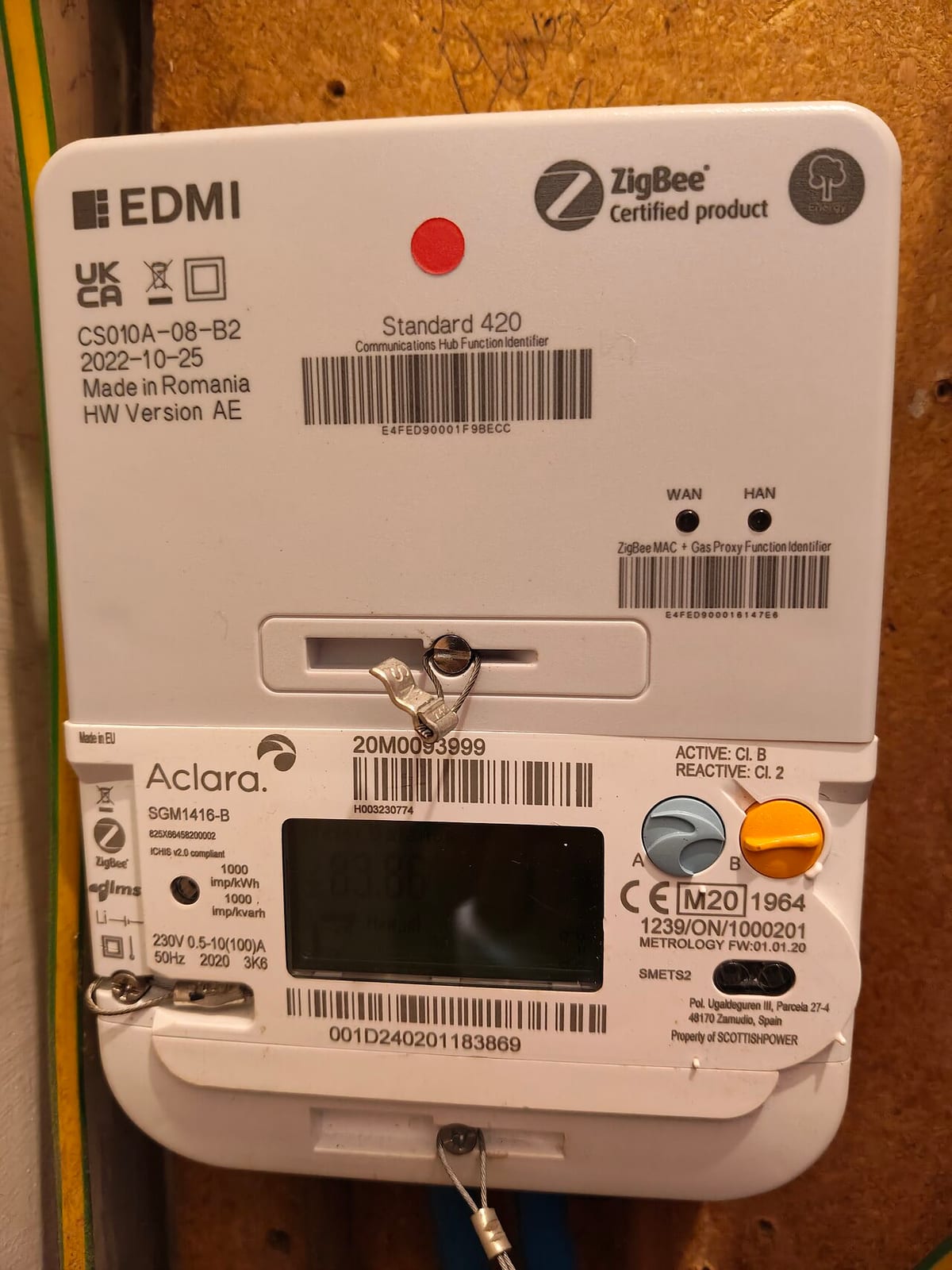

Since 1 October 2026, there has been no VAT on electricity for households in England, Scotland and Wales. The rate went from 5% to zero on all bills, including those under the price cap. Gas is still charged at 5% 1.
The legislation currently in force ends the zero rate on 31 March 2027 2, but HMRC says it now runs to 30 June 2027 3. Northern Ireland isn’t covered 3.
What it means for your electricity bill
Under the price cap for 1 October to 31 December 2026, Ofgem’s average electricity rates for Direct Debit customers on a default tariff in England, Scotland and Wales are 4:
- unit rate: 26.32 pence per kWh
- standing charge: 54.83 pence a day
Neither includes VAT 4. To put a figure on the cut: at the old 5% rate, every £100 of electricity, units and standing charge together, cost £105 with VAT. Now it costs £100, so the saving is one twenty-first of what the same electricity cost with VAT (£5 out of £105), whatever your tariff.
Ofgem will announce the next cap levels, for 1 January to 31 March 2027, by 25 November 2026 5. The government expects the extension to take around £50 off the annual price cap in April 2027 6. Our energy price cap guide explains the unit rate and standing charge, and our guide to what a kWh is explains the unit your bill is measured in.
When does the VAT cut on electricity end?
The official dates don’t match yet:
| Source | End of the zero rate | Dated |
|---|---|---|
| The legislation currently in force | 31 March 2027 2 | VAT Act as updated to 5 November 2026, still marked temporary until then 7 |
| HMRC guidance | 30 June 2027 3 | last updated 28 October 2026 |
| The Budget document | “until July 2027”, with a costing line that reads “from 1 October 2026 to 1 July 2027” 6 | 28 October 2026 |
| Ofgem’s price cap page | 31 March 2027 4 | still the date shown on 4 November 2026 |
HMRC’s later date comes from the three-month extension, from 31 March to 30 June 2027, that the government announced at Budget 2026 3. As of 6 November 2026, the only 2026 order on legislation.gov.uk with “Domestic Electricity” in its title was the one that brought in the zero rate 7.
Does it cover the standing charge and charging an EV at home?
HMRC treats the standing charge as part of the charge for your electricity, even though bills show it separately. Where the supply is for qualifying use (see below), the whole bill, standing charge included, is taxed at the rate for that use 3.
From 1 November 2026, electricity from a public or workplace charging point for electric vehicles doesn’t count as domestic use. Charging your car at home from your household supply isn’t caught by this rule, even if that electricity can be identified separately or is on a specific tariff at certain times of day 3.
Which homes and supplies count
The zero rate covers electricity for “qualifying use”: domestic use, or use by a charity outside its business activities 2. Domestic use covers electricity for 2:
- a home
- a building used for a relevant residential purpose, such as a children’s home, a care home, a hospice or student accommodation
- self-catering holiday accommodation
- a caravan or a houseboat
Hospitals, prisons and hotels don’t count as residential accommodation here 3.
Small supplies count as domestic whoever buys them. The law treats a supply as domestic if it isn’t more than 1,000 kilowatt-hours a month at the premises 2, and HMRC puts the limit at an average of 33 kWh a day, or 1,000 kWh a month, supplied to one customer at any one of their premises, whether the bill uses a meter reading or an estimate 3. A typical household sits far below that: Ofgem’s 2,500 kWh a year 1 is about 208 kWh a month (2,500 ÷ 12).
If a supply is only partly for qualifying use, the whole supply counts when at least 60% of it is; otherwise the supply is split between the two rates 2.
Northern Ireland stays at 5%
Household electricity in Northern Ireland remains at the reduced rate of 5%, as the zero rate doesn’t apply there 3 2.
At Budget 2026, the government said it’s funding the Northern Ireland Executive to provide comparable support with household electricity bills. It also said extended VAT relief is expected to apply in Northern Ireland from April 2027 6.
The law behind the zero rate
The government first announced the zero rate on 21 July 2026 3. The order behind it (SI 2026/987) was made on 7 September 2026 and came into force on 1 October 2026.
It zero-rates electricity supplied for qualifying use in England, Scotland and Wales from 1 October 2026 to 31 March 2027 2. HMRC’s guidance for suppliers, VAT Notice 701/19, confirms that qualifying supplies of electricity in Great Britain are liable to VAT at 0% 3.
Until an amending order appears, 31 March 2027 remains the end date written into law. For other changes to household bills, check our news page.
Sources
- Energy price cap (default tariff) update from 1 October 2026 (Summary of changes to energy price cap 1 October to 31 December 2026)
- The Value Added Tax (Supplies of Domestic Electricity) Order 2026 (SI 2026/987)
- Fuel and power (VAT Notice 701/19)
- Energy price cap unit rates and standing charges
- Changes to energy price cap between 1 October and 31 December 2026
- Budget 2026
- Value Added Tax Act 1994, Schedule 8 (Zero-rating), revised text; legislation.gov.uk title search "Domestic Electricity"