Cambridge researchers link contact loss in solid-state batteries to impurities in the lithium metal
A University of Cambridge study in Joule (August 2026) finds that impurities in lithium metal build up where it meets a solid electrolyte and cut contact, a failure usually blamed on voids. It’s a laboratory result: there’s nothing to buy and nothing to change for now.
Published
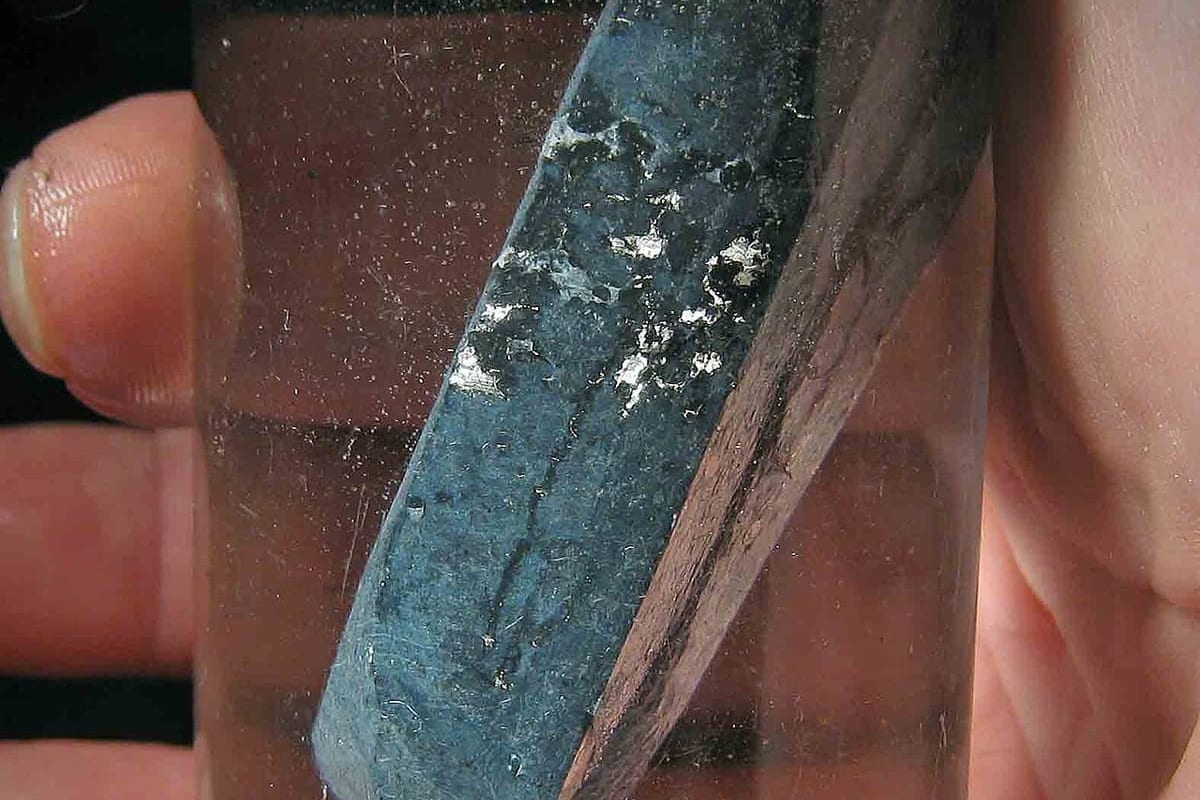

Solid-state batteries with a lithium metal electrode can lose contact inside the cell, and a team at the University of Cambridge has traced one cause to tiny impurities in the lithium itself 1. As lithium leaves the metal, the impurities stay behind and build up a porous, insulating layer against the solid electrolyte 1.
The study appeared in the journal Joule in August 2026. It’s a laboratory result, with no battery to buy 1.
Why do solid-state batteries lose contact?
In a solid-state battery, a solid material replaces the electrolyte that lithium ions travel through. Today’s lithium-ion cells typically use a lithium salt in organic solvents, with a graphite negative electrode 2; our guide to lithium-ion batteries explains how that family works. The Cambridge team paired a ceramic electrolyte, a garnet, with a lithium metal electrode 1.
That pairing is attractive for two reasons. Lithium metal electrodes can deliver higher specific energy, meaning more energy per kilogram, and ceramic electrolytes contain no volatile, flammable organic components 1.
The weak point is where the metal meets the ceramic. When lithium is drawn out of the metal into the electrolyte, a step called stripping, the two can lose contact 1.
It shows up as a rise in the cell’s voltage, a sign of growing resistance at that boundary. It is commonly blamed on voids, empty pockets that open in the lithium 1.
Impurities, not empty pockets, block the lithium
Lithium metal is never perfectly pure: commercial sources always carry small levels of impurities, and the lithium in this study was about 99.9% pure 1. A solid electrolyte lets lithium ions through but not the impurity particles. So as lithium is stripped, the particles accumulate at the boundary 1.
A tiny amount adds up fast. In the team’s worked example, a foil with 0.1% impurities by volume, in particles of 50 nanometres, leaves them about 0.18 micrometres apart at the boundary after only 5 micrometres of lithium has been stripped 1.
Stack pressure, the pressure that clamps the cell’s layers together, then has to push lithium through the gaps between those particles. When it can’t, empty pores open inside the impurity layer. They look like voids, but the particles hold them open, so extra pressure doesn’t close them 1.
To check, the team cooled tested cells to −150 °C, cut them open with a gentle ion beam and imaged the boundary with an electron microscope 1. In a cell stripped for about 6 hours, until its voltage reached 5 V, they saw no voids in clean lithium.
They saw impurities on the boundary, with voids inside and around that layer, and the oxygen they found suggests lithium-based oxides 1. Stronger beams used in earlier studies may knock such particles loose and make voids appear, the authors suggest 1.
Pressure alone doesn’t restore contact
Timing gave the clue. Voids in clean lithium should close quickly under pressure, yet contact loss persisted even when the cells were clamped hard 1:
| What happens | Stack pressure | Time |
|---|---|---|
| A void in clean lithium closes (calculated) | 10 MPa | about 1 second |
| A void in clean lithium closes (calculated) | 5 MPa | about 100 seconds |
| Voids close (observed) | 1.4 MPa | about 1 minute |
| Lithium creeps through an impurity layer (calculated) | 10 MPa | about 1 hour |
| Contact loss builds (measured) | tests at 5 to 15 MPa | typically about 30 minutes |
The cells also kept a memory of the damage. The team stripped for one hour, then let the cell rest for one hour under 10 MPa, again and again 1.
During each rest the voltage nearly recovered. Once the current came back, it rose quickly to where it had stood at the end of the previous stripping period 1. Voids in clean lithium would have closed during the rest; pores held open by impurities refill only slowly 1.
A second team watched voids form and heal
A separate study in the journal Matter, in its November 2026 issue, by Eric Roman, Neil P. Dasgupta and colleagues, looked at the same boundary 3. Watched under an optical microscope while the cells ran, the voids formed unevenly, changed over time and could be reversed by heating 4. Joule’s commentary on both papers, by X. Wendy Gu, appeared on 18 November 2026 4.
Is a solid-state battery you can buy any closer?
Not yet. The Cambridge tests used lithium on both faces of a garnet disc 1 to 1.3 mm thick, not complete batteries 1. They looked at stripping in one direction only, and the authors say more studies are needed on how repeated charging cycles affect contact loss. Voids may also play a part in other designs 1.
The authors point to “anode-free” cells, which have no lithium metal electrode to start with. The lithium electrode builds up on charging, from lithium that crosses the electrolyte from the positive electrode.
Because only lithium ions can cross, the electrolyte acts as a filter and the metal it builds is very pure 1. Their model suggests such cells could hold much more before losing contact, though impurities already at that boundary still play a role 1.
The work came from the University of Cambridge, the University of Warwick and the Faraday Institution, with Clare P. Grey as lead contact. An EU research grant and the Faraday Institution funded it, and Grey sits on Joule’s advisory board 1.
What purer lithium could change in your batteries
For now, nothing: lithium-ion batteries, the kind in power banks and portable power stations, have no metallic lithium in either electrode under the US hazardous materials definition 5. If anode-free solid-state cells reach products, a cleaner lithium electrode could keep its contact for longer, and lithium metal could mean lighter batteries for the same energy, since it delivers higher specific energy 1.
Cells with no flammable organic liquid inside could also be less prone to fire, though this study tested neither lifespan in a real battery nor fire safety. How the chemistries on sale today compare is set out on our battery types page, and the habits that cut today’s risks are in our lithium battery fire safety guide.
When a solid-state result moves closer to a product, or a recall touches the batteries you already own, it goes into our news section.
Sources
- Contact loss in all-solid-state Li-ion batteries via deposition of impurities
- U.S. DOE Energy Storage Handbook, Chapter 3: Lithium-Ion Batteries (sections 2.1.1.1 Cell Reaction and 2.1.1.2 Key Cell Components)
- Operando visualization of void formation and recovery at lithium-solid electrolyte interfaces
- Interfacial void evolution in solid-state batteries
- 49 CFR 171.8 Definitions and abbreviations (eCFR, current)