Plug-in solar panels have been legal in Great Britain since 27 August 2026: what the law changed and what applies now
Since 27 August 2026, plug-in solar kits of up to 800 W have been legal in England, Wales and Scotland, provided the device complies with the government’s product specification. Not in Northern Ireland yet. Before you buy, check whether you need permission, and that the kit is marked Compliant on the ENA register, then tell your network operator when you install it.
Published
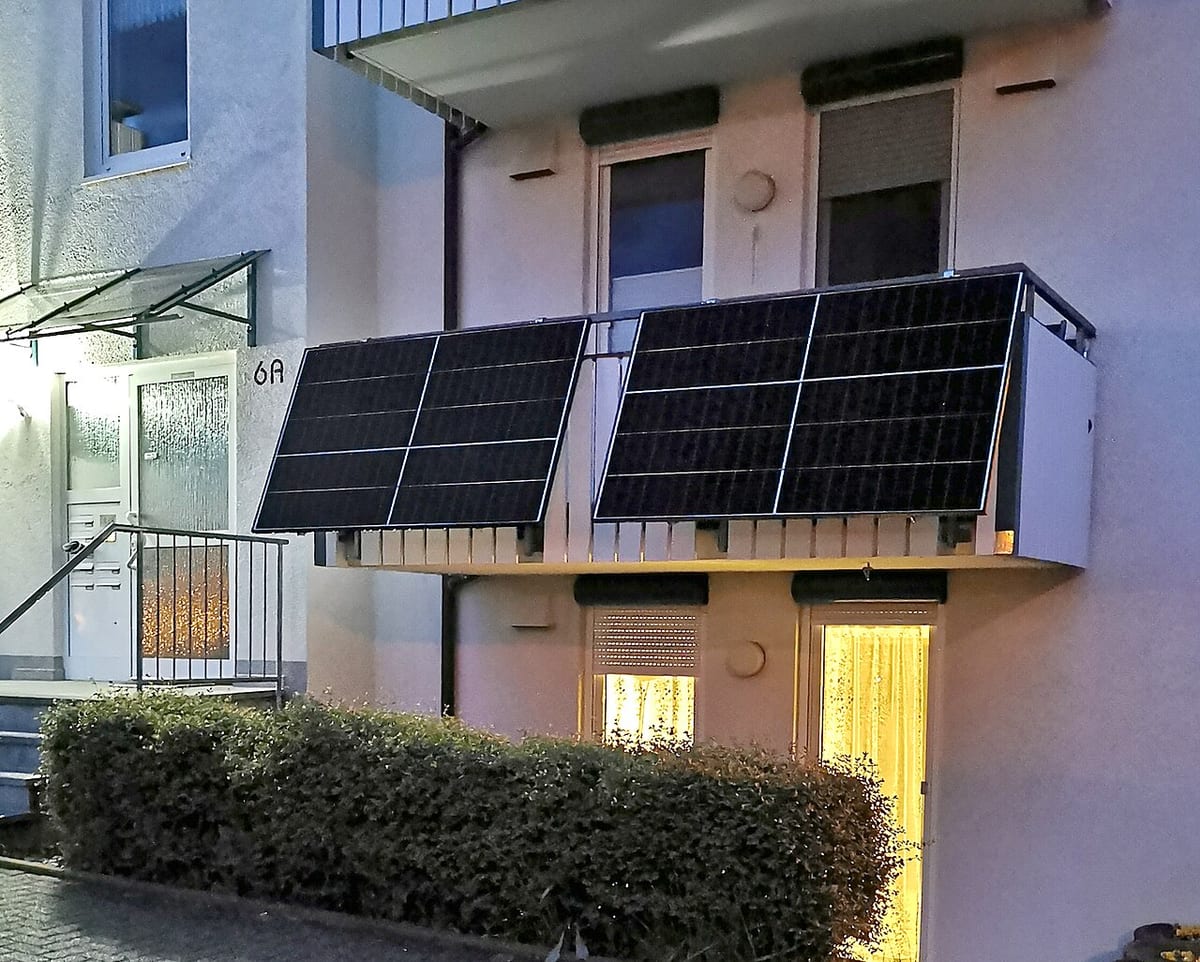

Plug-in solar has been legal in England, Wales and Scotland since 27 August 2026. You can plug a small solar panel kit, with an output of up to 800 watts, into an ordinary socket, provided the device complies with the government’s product specification 1. Northern Ireland hasn’t followed yet 2.
Our plug-in solar guide covers the rules in more detail.
Is plug-in solar legal in the UK?
In Great Britain, yes. The change to the electricity safety rules covers England, Wales and Scotland only, while the approval of plugs for these kits extends to Northern Ireland too 1. The government’s press release of 26 August 2026 said the panels were becoming legal across Great Britain 3.
In Northern Ireland, plug-in solar devices are not currently permitted under the existing electricity safety framework. The Minister for the Economy said so in a written answer on 11 September 2026, adding that changes to the Northern Ireland regulations would be “progressed as soon as possible”.
Later answers in September gave no date, and a question tabled on 2 November 2026 asking for an update hadn’t been answered 2. Northern Ireland also has its own grid connection rules, G98/NI, and the product specification says its use there is subject to further consideration 4.
Before you buy or install a kit
- Check whether you need permission from a landlord, building owner or freeholder, or planning permission or listed building consent. The government advises this check before you buy or install 3.
- Look the model up on the ENA Type Test Register and make sure it’s marked Compliant 5.
- Plug it into a socket circuit with the kit’s own plug and no adaptor (the limits are below) 4.
- Once it’s installed, notify your distribution network operator (DNO), the company that runs your local electricity network 6.
The government estimated in August 2026 that households could save up to £110 a year 3. That’s its estimate, not a measured figure. Our energy price cap guide explains what you pay for each unit of electricity you buy.
The limits a plug-in solar kit must meet
Under the government’s interim product specification 4:
- Output: no more than 800 VA or 3.5 A supplied to the mains.
- Panels: solar modules totalling no more than 2,000 W of DC power. Above 960 W of modules, the manufacturer must advise you to consider a professional assessment of your existing wiring.
- Plug: only the manufacturer’s own BS 1363 plug, a non-rewireable moulded plug with a BS 1362 fuse not exceeding 5 A.
- Circuit: socket circuits only. Lighting circuits are ruled out, as are spurs feeding fixed equipment such as a cooker or boiler.
- Adaptors: no multi-way, travel or RCD adaptors.
- Outdoors: an outdoor plug or socket is required to be rated at least IP55.
- Where it goes: never on timber cladding, timber balconies or buildings under external wall remediation works.
Manufacturers must register each device on the ENA Type Test Register and get confirmation that it’s compliant before selling it 4. The register marks each entry Compliant or Non-compliant, so a listing alone doesn’t prove a kit is compliant 5.
One kit per household, and no batteries
On 11 August 2026, Ofgem approved a change to G98, the grid connection rules, which took effect with the new regulations. It allows only one plug-in device per household, lets you install it yourself without a qualified installer, and asks you to tell your DNO on simplified G98 forms when you install or remove it 6.
Already have panels on the roof? A plug-in kit can sit alongside permanently wired microgenerators, as long as the total stays within G98’s limit of 16 A per phase 6.
The government has said the specification should allow one device per circuit, but only once G98 is amended. Until then, the one-per-household limit still applies 7.
The approval covers plug-in solar only, not plug-in batteries 7. Under the government’s current proposals, plug-in storage devices remain prohibited from being sold, supplied or used in the UK 6. And a plug-in kit must not be used with a battery storage system 4.
What the law changed
Before 27 August 2026, it was not permitted to supply or use a “plug-in microgenerator”, the law’s term for these kits. The electricity safety regulations required compliance with BS 7671, the wiring regulations, and BS 1363 doesn’t permit plugs to connect generators to sockets 8.
The new law, SI 2026/848, was made on 16 July 2026 and laid before Parliament on 17 July 2026. It provides for the approval of plugs for these devices under the plug safety regulations. It also says a plug-in microgenerator must not be installed or operated unless it complies with the interim product specification published on 16 July 2026 1.
The law defines a plug-in microgenerator as a device that makes electricity from sunlight, with a rated AC output of no more than 800 watts. It connects to a home’s low-voltage installation by a standard plug and socket and runs in parallel with the network. It isn’t designed to import electricity for storage, other than for control or auxiliary functions the specification allows 1.
The law followed a consultation by the Department for Energy Security and Net Zero (DESNZ). It ran from 16 to 30 June 2026 and received 466 responses. The government published its response on 16 July 2026 7.
The specification is interim. Work will begin on longer-term standards to succeed it 7, and the government expects a full revision of the British Standards in around two to three years 8. Our solar panels guide explains how panels make electricity, and our news page carries other UK rule changes as they’re made.
Sources
- The Plugs and Sockets etc. (Safety) Regulations 1994 and Electricity Safety, Quality and Continuity Regulations 2002 (Amendment) Regulations 2026 (SI 2026/848), as made
- NI Assembly written questions and answers on plug-in solar (AQW 50870, 51138, 51610, 52362, 42994, 55641/22-27)
- Households can save as plug-in solar panels come to market
- Plug-in Solar Device Interim Product Specification, Version 2.0, July 2026
- ENA Connect Direct: Search the ENA Type Test Register (type Plug-in Solar)
- Ofgem decision to Approve DCRP/MP/26/02: Proposed Amendment to facilitate Plug-in Microgeneration
- Plug-in solar: Regulatory amendment and interim product specification (consultation outcome page) and Plug-in solar: government response, July 2026
- Explanatory Memorandum to the Plugs and Sockets etc. (Safety) Regulations 1994 and Electricity Safety, Quality and Continuity Regulations 2002 (Amendment) Regulations 2026 (2026 No. 848)